Description
PRODUCT CITATION:
1. Low mortality rate in Italian rheumatoid arthritis patients from a tertiary center: putative implication of a low anti-carbamylated protein antibodies prevalence
D Iacono, E Favoino, A Borgia
Open Access Rheumatology: Research and Reviews, 2018
2. Diagnostic Accuracy of Anticarbamylated Protein Antibodies in Established Rheumatoid Arthritis: A Monocentric Cross-Sectional Study. Gian Luca Erre, et al
ACR Open Rheumatology: Volume1, Issue7, Pages 433-439, September 2019
3. Unique Serum Immune Phenotypes and Stratification of Oklahoma Native American Rheumatic Disease Patients: Samantha Slight-Webb et al.
Arthritis Care & Research Volume75, Issue, April 2023, Pages 936-946
RELATED PRODUCTS:
1. Carbamylated BSA, Cat# PR-C1001
2. Rabbit anti-CarP antibody, Cat# AB-09021R
3. Carbamylated protein ELISA, Cat# BG-HUM09021P
Several proteins have been demonstrated to undergo carbamylation in different pathophysiological conditions, often altering their structure and rendering them dysfunctional. Long-lived proteins are particularly prone to PTMs such as carbamylation, which are considered the hallmark of molecular aging. Carbamylation of a-crystallins induces conformational changes responsible for lens opacities in cataract. In addition, carbamylation disturbs the triple helix structure of collagen type I, leading to a decreased ability to polymerize into normal fibrils and increased susceptibility to collagenases. Furthermore, enzymatic activity of insulin and erythropoietin are substantially diminished after carbamylation. Interestingly, carbamylation has also been shown to be potentially involved in the pathogenesis of rheumatoid arthritis, where in animal models carbamylated peptides were shown to serve as a potent neo-antigen for production of autoantibodies and an erosive arthritis phenotype. Importantly, recent studies also show protein carbamylation occurs at increased levels within atherosclerotic plaques1, and alternative studies suggest that protein carbamylation may play a role in Alzheimer disease development through the generation of abnormal tau protein deposits in the brain.
Data Sheet
| Assay time | 90 – 120 minutes |
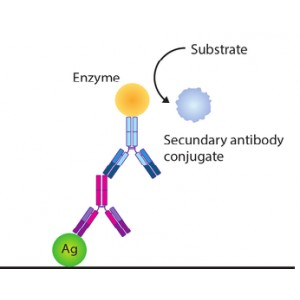
| Assay Type | Indirect ELISA |
| Country of origin | The U.S. |
| Dilution Factors | 1:100 |
| Distributor | Worldwide |
| Expiration | 12 months |
| Kit Type | Colorimetric |
| Product Citations | Available now |
| Request a manual or protocol | techsupport@novateinbio.com |
| Request a quote | sales@novateinbio.com |
| Sample Type | serum |
| Sample Volume | 2 – 5 µl |
| Sensitivity | 99% |
| Specificity | 96% |
| Storage | 2-8°C, -20°C |