Description
Overview
Long Name |
Antibody Type |
Antibody Isotype |
Host |
Species Reactivity |
Validated Applications |
Purification |
| advanced glycosylation end product-specific receptor | Polyclonal | IgG | Rabbit | Human, Mouse, Rat | IHC-P, WB | Immunogen affinity purified. |
Immunogen |
||||||
| A synthetic peptide corresponding to a sequence at the N-terminus of human RAGE (91-120aa IQDEGIFRCQAMNRNGKETKSNYRVRVYQI), different from the related mouse and rat sequences by six amino acids. | ||||||
Properties
Form |
Lyophilized |
Size |
100 µg/vial |
Contents |
Antibody is lyophilized with 5 mg BSA, 0.9 mg NaCl, 0.2 mg Na2HPO4, 0.05 mg NaN3. *carrier free antibody available upon request. |
Concentration |
Reconstitute with 0.2 mL sterile dH2O (500 µg/ml final concentration). |
Storage |
At -20 °C for 12 months, as supplied. Store reconstituted antibody at 2-8 °C for one month. For long-term storage, aliquot and store at -20 °C. Avoid repeated freezing and thawing. |
Additional Information Regarding the Antigen
Gene |
AGER |
Protein |
Advanced glycosylation end product-specific receptor |
Uniprot ID |
Q15109 |
Function |
Mediates interactions of advanced glycosylation end products (AGE). These are nonenzymatically glycosylated proteins which accumulate in vascular tissue in aging and at an accelerated rate in diabetes. Acts as a mediator of both acute and chronic vascular inflammation in conditions such as atherosclerosis and in particular as a complication of diabetes. AGE/RAGE signaling plays an important role in regulating the production/expression of TNF- alpha, oxidative stress, and endothelial dysfunction in type 2 diabetes. Interaction with S100A12 on endothelium, mononuclear phagocytes, and lymphocytes triggers cellular activation, with generation of key proinflammatory mediators. Interaction with S100B after myocardial infarction may play a role in myocyte apoptosis by activating ERK1/2 and p53/TP53 signaling (By similarity). Receptor for amyloid beta peptide. Contributes to the translocation of amyloid-beta peptide (ABPP) across the cell membrane from the extracellular to the intracellular space in cortical neurons. ABPP-initiated RAGE signaling, especially stimulation of p38 mitogen-activated protein kinase (MAPK), has the capacity to drive a transport system delivering ABPP as a complex with RAGE to the intraneuronal space. Can also bind oligonucleotides. |
Tissue Specificity |
Endothelial cells. |
Sub-cellular localization |
Isoform 1: Cell membrane; Single-pass type I membrane protein. |
Sequence Similarities |
Contains 2 Ig-like C2-type (immunoglobulin-like) domains. |
Aliases |
Advanced glycosylation end product-specific receptor antibody|AGER antibody| MGC2235 antibody|MGC22357 antibody|RAGE_HUMAN antibody|Receptor for advanced glycation endproducts antibody|Receptor for advanced glycosylation end products antibody |
Application Details
| Application | Concentration* | Species | Validated Using** |
| Western blot | 0.1-0.5μg/ml | Human, Rat | AssaySolutio’s ECL kit |
| Immunohistochemistry(Paraffin-embedded Section) | 0.5-1μg/ml | Human, Mouse, Rat | AssaySolutio’s IHC/ICC Detection kit |
AssaySolution recommends Rabbit Chemiluminescent WB Detection Kit (AKIT001B) for Western blot, and Rabbit Peroxidase IHC/ICC Detection Kit (AKIT002B) for IHC(P). *Blocking peptide can be purchased at $65. Contact us for more information

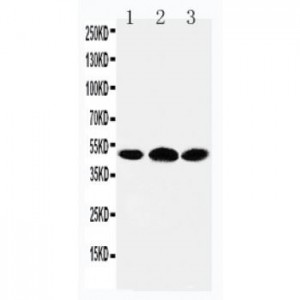
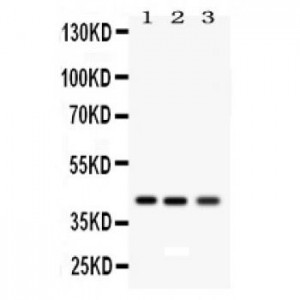
Anti- RAGE antibody, ASA-B1608, Western blotting
All lanes: Anti RAGE (ASA-B1608) at 0.5ug/ml
Lane 1: Rat Lung Tissue Lysate at 50ug
Lane 2: RH35 Whole Cell Lysate at 40ug
Lane 3: HELA Whole Cell Lysate at 40ug
Predicted bind size: 43KD
Observed bind size: 43KD
All lanes: Anti RAGE (ASA-B1608) at 0.5ug/ml
Lane 1: Rat Lung Tissue Lysate at 50ug
Lane 2: RH35 Whole Cell Lysate at 40ug
Lane 3: HELA Whole Cell Lysate at 40ug
Predicted bind size: 43KD
Observed bind size: 43KD

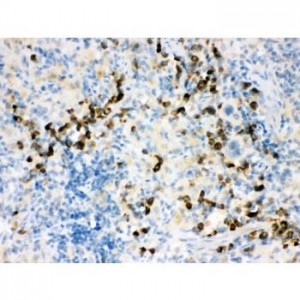
Anti- RAGE antibody, ASA-B1608, IHC(P)
IHC(P): Mouse Lung Tissue
IHC(P): Mouse Lung Tissue

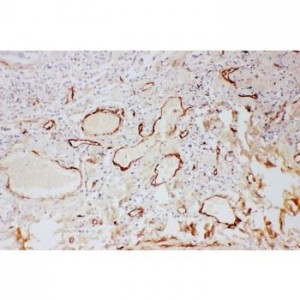
Anti- RAGE antibody, ASA-B1608, IHC(P)
IHC(P): Rat Lung Tissue
IHC(P): Rat Lung Tissue