Description
|
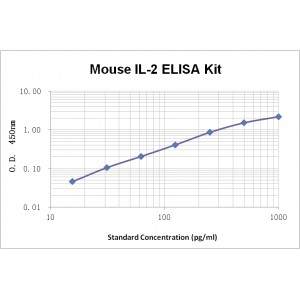
Assay Range |
15.6–1000 pg/mL |
|
Sensitivity |
1.0 pg/mL |
|
Specificity |
No cross-reaction with other related substances detected |
|
Size |
96T |
|
Storage |
Store at 2 – 8ºC. Keep reconstituted standard and detection Ab at -20 ºC |
|
Assay Principle |
Sandwich ELISA |
|
Sample Volume |
100 µL final volume, dilution factor varies on samples |
|
Sample Type |
Serum, plasma, body fluids, tissue lysate or cell culture supernatant |
|
Detection Method |
Chromogenic |
Kit Components
1. Recombinant Mouse TGF alpha standard: 2 vials
2. One 96-well plate coated with Mouse TGF alpha Ab
3. Sample diluent buffer: 12 mL – 1
4. Detection antibody: 1 vial
5. Streptavidin-HRP: 1 vial
6. Antibody diluent buffer: 12 mL x1
7. Streptavidin-HRP diluent buffer: 12 mL x1
8. Chromogenic solution A: 6 mlx1
9. Chromogenic solution B: 6 mlx1
10. Stop solution: 6 mL x1
11. Washing solution (20x): 25 mL x1
Background
Transforming growth factor alpha (TGF-α), also known as EGF-like TGF (ETGF), TGF type 1, is a member of the EGF family. TGF-α gene encodes a 160 amino acid (aa) precursor protein consisting of an N-terminal, plasma membrane-targeting signal sequence, extracellular domain with N- and O-linked glycosylation sites, a single transmembrane-spanning region, and a cytoplasmic tail. Human TGF-α shares approximately 93% aa sequence identity with mouse and rat counterparts, respectively.
TGF-α is widely expressed in various tissues such as endocrine, hematopoietic, immune, integumentary, nervous, respiratory, and urinary systems. TGF-α precursor is cleaved by tumor necrosis factor alpha converting enzyme (TACE) to generate the soluble mature TGF-α which is a ligand for the EGFR. TGF-α binding initiates EGF R dimerization, tyrosine autophosphorylation, and activation of signaling pathways involving SH domain containing proteins to regulate transcription. Primarily, TGF-α plays a role in promoting cell proliferation, differentiation, and transformation. Recently, it has been showed that TGF-α also functions in angiogenesis, bone resorption, cell metabolism, cell migration and wound healing.